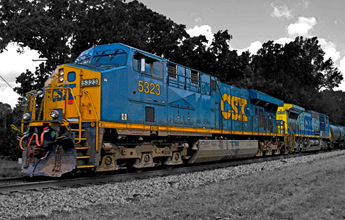
President’s Panel Makes Recommendations in Railroad DisputeNovember 14, 2011
Thanks to increased productivity, technological advances and the rising popularity of freight services, major railroad companies are enjoying historic profits – even as the U.S. economy struggles through a multi-year recession.Despite their record-breaking success, the biggest companies are demanding concessions from workers, including the nearly 6,000 employees represented by the IBEW. Ongoing contract disputes between 12 unions and the nation’s freight rail carriers passed a milestone Nov. 5, when a special panel appointed by President Obama made recommendations in an attempt to form the framework to resolve the parties’ disagreements. The Presidential Emergency Board heard parties’ proposals for settlement and issued a report recommending wage increases and changes to the employees’ health and welfare plan. The board recommended a 15-percent wage increase over five years. It’s a modest increase over the carriers’ offer, but significantly lower than the package proposed by the unions. The board’s recommended changes to the benefits package – which is in line with the carriers’ proposals – threaten to hurt working families, IBEW Railroad Department Director Bill Bohné said:
Bohné joined other labor leaders who testified at a board hearing in October. He called for the carriers to enhance vacation week allotments that have remained unchanged for nearly 30 years. While the unions’ requests are modest and would bring vacation qualification time in line with that of railroad management, says Bohné, the railroads, led by the National Carriers’ Conference Committee, comprising large companies like CSX and BNSF, continue pushing for major concessions. He said:
The parties now enter a 30-day cooling off period as the sides attempt to reach a final settlement. The IBEW is part of a six-union group called the Coalition of Rail Unions (CRU) which resumes bargaining Nov. 10. Fellow unions in the coalition are the American Train Dispatchers, the Brotherhood of Railway Carmen, the Machinists, the Transportation Communications Union and the Transport Workers. Other unions involved in industry-wide negotiations are part of the Rail Labor Bargaining Coalition, which includes the International Brotherhood of Boilermakers and Blacksmiths, the Brotherhood of Locomotive Engineers and Trainmen, the Brotherhood of Maintenance of Way Employees, the Brotherhood of Railroad Signalmen, the National Conference of Firemen and Oilers and the Sheet Metal Workers union. The members’ five-year contract expired January 1, 2010. Since then, employees have continued to work under status quo provisions while parties engaged in bargaining sessions. If a solution is not reached by Dec. 6, three options are possible. The unions could strike, the railroads could impose their proposed changes on the workers, or Congress could step in and settle the dispute while considering the findings of the presidential commission. But Congress would not be bound by the report’s recommendations – a fact that Bohné says could be to the detriment of workers:
To view the Presidential Emergency Board’s report, click here. Scroll to page 87 to see the board’s full recommendations. Photo used under a Creative Commons license by Flickr user steven-g..
|