Climate Change Bill Passes House;
IBEW Eyes
Senate for Improvements
June 30, 2009
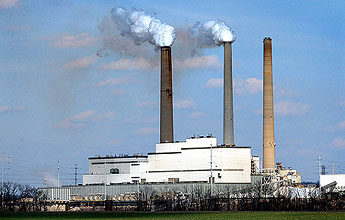 Congress on Friday took the first step in setting long-term policy to slow climate change. Congress on Friday took the first step in setting long-term policy to slow climate change.
The package, which passed the House of Representatives in a close 219-212 vote, sets higher efficiency standards, encourages increased use of alternative energy and sets stricter limits on the amount of carbon dioxide emissions from vehicles, manufacturers and power plants.
While the bill contains many provisions favored by the IBEW, like Davis-Bacon prevailing wage protections, promotion of additional electrical transmission capacity and incentives for the development of clean coal technologies, the IBEW could not wholeheartedly support the bill due to what we consider to be unrealistic CO2 emissions goals. Specifically, the legislation calls for a 17 percent reduction from 2005 levels of CO2 releases by 2020.
One of the U.S.’s greatest natural resources is coal, which supplies 50 percent of America’s electricity. In a letter sent to members of Congress before the vote, IBEW International President Edwin D. Hill expressed his concern for the timetable in the bill.
“Renewable energy alone is not enough; we must include coal, using carbon capture and storage technologies now in development, and expand nuclear energy generation as a part of the U.S. energy mix,” Hill said.
IBEW members have been on the forefront of the new technologies that make wind, solar, biomass and tidal power viable alternative options today. These, plus hydro, nuclear and clean coal, are all vital sources of energy that must be considered to fill an ever-growing need for electricity.
“If we do not use all the energy resources and technology available to us, Americans will either still be contributing to global climate change by 2020 or forced to accept a diminished energy-producing capacity with the accompanying economic disruption and job losses that will make the current recession look tame,” Hill said.
An Electric Power Research Institute analysis concluded that by 2020, with aggressive research and development, carbon capture and storage would be commercially available. The report also said to be successful in reducing greenhouse gas emissions, the United States needs 42 new nuclear plants, 200 advanced coal plants and 100,000 wind turbines.
Hill also registered his concerns over the lack of strong language to protect U.S. international competitiveness. The bill contains language drafted jointly in 2007 by the IBEW and AEP that seeks to provide incentives for the country’s trading partners to reduce their CO2 emissions by requiring them to adopt their own cap and trade program or to purchase carbon credits to sell their products in the United States. However, this language doesn’t take effect until 2020. The IBEW believes that our industries cannot wait until 2020; the IBEW’s position is that the international provision should start a year after the bill is enacted.
“Our steel plants in the United States are some of the most modern in the world, but they would not be able to compete with China if the U.S. has a carbon cost and our trading partners do not,” said Utility Department Director Jim Hunter. “We have a legal right to be concerned about the CO2 footprint to create those products and sell them in our country.”
IBEW leaders are hopeful that these provisions are changed when the Senate takes up the bill. Policy makers in that chamber are already drafting proposed legislation.
“The IBEW recognizes the science of global warming, but we insist on realistic legislation to address the problem that preserves both jobs and the environment,” Hill said.

|

 Related Articles


